
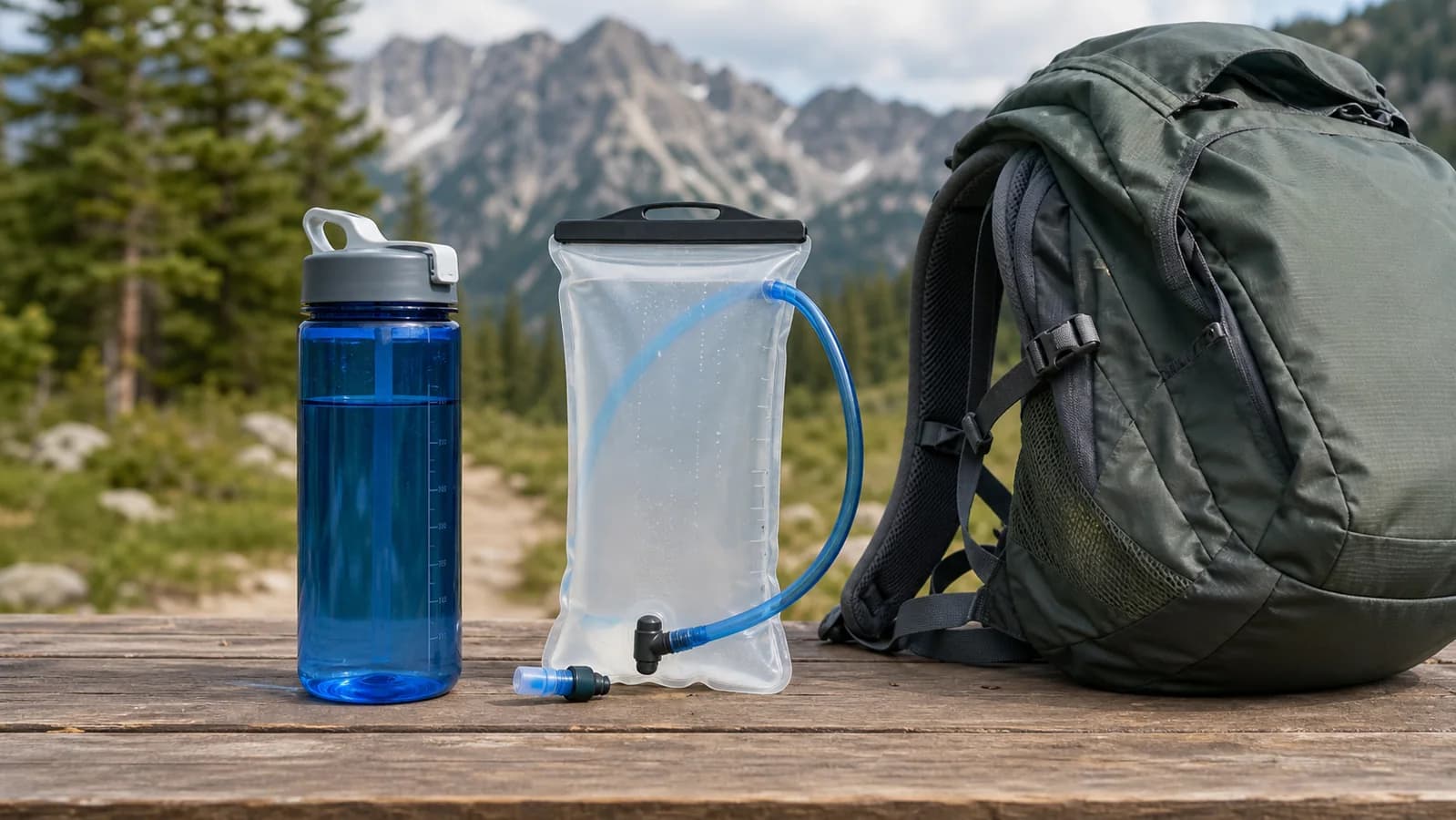
What Is a Water Bottle for Hiking?: water bottle vs hydration reservoir
A water bottle for hiking is a portable container—typically ranging from 16 to 32 ounces—that you fill before or during your hike and drink from by hand. Standard options include hard plastic bottles, stainless steel bottles, and insulated bottles that maintain temperature in varying conditions. They slide into side pockets on hiking packs or fit into hand loops on frameless packs, making them accessible without unpacking anything. Water bottles require no assembly beyond filling and screwing on the cap, making them straightforward for any skill level, whether you're planning your first day hike or tackling longer terrain.
The visibility that water bottles offer is a practical advantage on the trail. You can see your water level at a glance, which helps you track intake and plan refill stops strategically. This becomes especially useful on longer day hikes where water sources may be spaced irregularly. Many hikers appreciate the simplicity of grabbing a bottle, drinking, and returning it to the pocket without breaking stride. For those building their hiking gear checklist for beginners, starting with a reliable water bottle is a logical first step before adding more specialized equipment.
Different bottle materials suit different needs and conditions. Plastic bottles are lightweight and inexpensive but may retain flavors over time. Stainless steel options resist odors and dents but add weight and can dent on hard impacts. Insulated bottles keep water cold in summer heat and help prevent freezing in cold conditions, though they carry a higher price tag and extra weight.
What Is a Hydration Reservoir for Hiking?
A hydration reservoir is a soft, collapsible bladder—usually holding 1.5 to 3 liters of water—that fits inside the main compartment of a hiking pack. A drinking tube extends from the reservoir up to a bite valve near your chest or shoulder strap, allowing hands-free sipping while walking. This design keeps your hands free for trekking poles, navigating app screens, or steadying yourself on uneven terrain. Reservoir systems have become standard equipment for serious hikers and backpackers who prioritize continuous hydration over convenience.
The setup process for a hydration reservoir is more involved than simply filling a bottle. You need to thread the drinking tube through the designated routing channels in your pack, secure the bite valve to a clip on your shoulder strap, and check for leaks before setting out. Some packs come hydration-ready with internal sleeves and routing ports, while others require improvisation or add-on accessories. Understanding your hiking backpack size guide helps determine whether a reservoir fits comfortably inside without compressing other gear.
The capacity advantage of reservoirs often makes them the default choice for longer trips. Carrying 2 to 3 liters of water in bottles would require multiple containers occupying valuable pocket space. A reservoir concentrates this volume into a single bladder that fits flat against your back. This efficiency matters for overnight trips where every inch of pack space affects weight distribution and comfort.
How Do These Options Work in Practice?
In practice, water bottles demand a brief stop and a drinking motion that takes one or two hands. You pull the bottle from its pocket, open the cap, drink, close it, and return it. On gentle, maintained trails where stops are frequent and natural, this interruption is negligible. On steep, technical terrain where balance is critical, even a short pause can disrupt your rhythm. Many day hikers find bottles perfectly adequate for their typical routes and preferred pace.
Hydration reservoirs let you drink while moving by biting the valve and drawing water through the tube. This continuous sipping approach keeps you consistently hydrated without forcing you to evaluate whether a stop is worth the effort. Studies on hydration habits suggest that convenience directly influences how much water people actually consume. If a system is harder to use, people tend to drink less, which can affect performance and safety on longer outings.
However, reservoirs require more setup before a hike and need regular cleaning to prevent bacterial growth inside the tube and bladder. The maintenance curve is real—reservoirs demand attention that bottles simply do not. For hikers building their packing checklist for a first hike, understanding this commitment is important before committing to a reservoir system. Some hikers start with bottles and add a reservoir later once they have established a routine and know their typical hydration needs.
When to Choose a Water Bottle
Choose a water bottle when you take frequent breaks anyway, hike short distances, or prefer to track exactly how much water remains at all times. Bottles suit maintained trails with reliable refill sources every few miles, where the ability to grab and drink quickly outweighs the convenience of a drinking tube. If your pack lacks internal hydration routing or has limited main compartment space, bottles in side pockets become the practical default. They also work better for hikers carrying other beverages like electrolytes, sports drinks, or flavored water that might damage reservoir materials or leave residue.
Bottles are preferable in freezing or near-freezing conditions where bite valves can ice up and become unusable. An insulated bottle in your jacket pocket thaws faster than a frozen reservoir bladder buried in your pack. Some hikers also prefer bottles for shared drinking scenarios—pouring water over their head to cool down or sharing with a trail companion is simpler with a bottle than negotiating a bite valve. If you value tactile feedback and visible progress toward your hydration goals, bottles provide that reassurance automatically.
For those learning how to choose trekking poles and other technical gear, starting with simpler equipment like bottles reduces the cognitive load of trip preparation. Adding complexity gradually as experience grows is a sensible approach to building outdoor skills. A hiker who feels overwhelmed by gear decisions benefits from mastering basic hydration with a bottle before introducing reservoir maintenance into their routine.
When to Choose a Hydration Reservoir
Choose a hydration reservoir when you need continuous sipping on long ascents, technical trails, or multi-day backpacking trips where pack space matters. Reservoirs excel on hot days when dehydration risk is high and stopping frequently is impractical or unsafe. They free your hands for trekking poles, camera equipment, or navigating difficult footing without interrupting your drinking rhythm. If your pack includes a hydration sleeve and routing ports, a reservoir integrates cleanly without occupying external pockets that you need for other items on your hiking gear checklist.
For backpackers calculating their hiking backpack size guide needs, reservoir capacity often influences how much total water they can carry efficiently. A single 3-liter bladder takes up less space than three separate 1-liter bottles. This compactness helps with weight distribution and pack balance, which matters more on overnight trips where you're carrying everything for extended periods. Many ultralight backpackers default to reservoirs specifically for this organizational advantage.
Reservoirs also suit hikers who struggle to drink enough water because they forget or dislike stopping. The constant proximity of the bite valve serves as a visual and physical reminder to hydrate regularly. Some reservoir systems include insulation sleeves for the tube to prevent freezing, expanding their usability into shoulder seasons when temperatures fluctuate. If you know from experience that you dehydrate easily or that drinking interruptions affect your hiking performance, a reservoir addresses those problems directly.
Decision Matrix: Comparing Key Criteria
When comparing water bottle vs hydration reservoir options, use these criteria to guide your decision. Visibility favors bottles—they show water level instantly through transparent walls or by weight. Reservoirs require squeezing the bladder or estimating, which some hikers find less reliable. Convenience favors reservoirs for hands-free drinking during movement, but bottles win for quick, on-demand access when stopped.
Maintenance is where the two systems diverge most sharply. Bottles are easier to clean and dry—simply rinse them and leave them upside down. Reservoirs need regular tube brushing with specialized brushes, thorough rinsing of the entire bladder, and complete air drying to prevent mold. This maintenance commitment should factor into your trip planning, especially if you hike frequently and accumulate multiple cleaning cycles.
Durability and temperature performance also differ practically. Bottles resist punctures and function across extreme temperature ranges, especially insulated models. Reservoirs can tear if stored carelessly or develop leaks at connection points under pressure. Temperature-wise, insulated bottles handle cold and heat reliably, while reservoirs lack insulation—they warm quickly in summer and freeze faster in cold conditions.
Who Each Option Suits Best
A water bottle suits beginners building their hiking gear checklist, casual day hikers on well-maintained trails, anyone carrying multiple beverage types, and hikers in climates where temperature extremes affect water quality. Bottles also suit those who prefer minimal setup, value visible hydration tracking, or simply want reliable performance without ongoing maintenance.
A hydration reservoir suits committed hikers and backpackers, those tackling technical terrain requiring hands-free balance, hot-weather hikers prioritizing continuous hydration, and multi-day trekkers optimizing pack space. Reservoirs also benefit athletes with high sweat rates, hikers who forget to drink without prompting, and anyone whose pack design supports hydration integration.
- Beginners and casual hikers: Water bottle
- Day hikers on maintained trails: Water bottle
- Multi-day backpackers: Hydration reservoir
- Technical terrain with trekking poles: Hydration reservoir
- Hot weather and high output: Hydration reservoir
- Freezing conditions: Water bottle
- Mixed beverage carrying: Water bottle
Practical Trade-offs to Consider
The trade-offs extend beyond basic convenience into your overall trip management strategy. A full reservoir sits deep in your pack, making it harder to access water if you need to ration during emergencies or unexpected delays. A water bottle in a side pocket lets you grab it immediately, pour water, or assess your remaining supply without unpacking. This accessibility difference matters in situations where water availability is uncertain or when you need to share water quickly with another hiker.
Some hikers carry both systems strategically—a reservoir for primary hydration and a bottle for backup drinks or emergency water. This hybrid approach uses each system where it excels. The bottle carries electrolytes or backup water while the reservoir provides continuous hydration through the day. Others prefer bottles exclusively because they can pour water over their head to cool down, fill a small cook pot, or share with companions more easily than managing a drinking tube.
Budget and long-term costs factor into the decision as well. A basic reusable water bottle costs less upfront and lasts many seasons with minimal replacement parts. A quality reservoir requires occasional replacement of bite valves, drinking tubes, and occasionally the bladder itself if it develops persistent leaks. For hikers building their what to pack for a first hike checklist on a budget, starting with bottles and investing in a reservoir later makes financial sense.
Common Mistakes to Avoid
The most frequent mistake with hydration choices is mismatching the system to the trip type. Bringing a reservoir on a two-mile day hike means extra setup and cleaning work with little benefit. Conversely, relying on a single small water bottle for a challenging all-day hike can leave you rationing water on water-scarce trail sections. Align your hydration choice with the demands of the specific hike, not habit or equipment preference alone.
Neglecting reservoir cleaning leads to mold, odors, and potential gastrointestinal issues. This mistake is common among new reservoir users who underestimate the maintenance curve. Establish a cleaning routine immediately—rinse after each use with warm, soapy water, use reservoir brushes for the tube, and always air dry completely before storage. Never store a wet reservoir in an enclosed space; mold develops rapidly and can contaminate your next fill.
Not monitoring water levels in a reservoir leaves you guessing about remaining supply. Unlike bottles where you can see exactly how much remains, reservoirs require proactive checking by squeezing the bladder or tracking consumption against distance. Hikers who skip this step may run dry on long, dry trail sections without accessible refill sources. Pair your reservoir with a habit of checking water levels at each planned stop. Finally, failing to test bite valve functionality before a trip results in leaks, malfunctions, or unpleasant surprises when you need hydration most.
How to Make Your Final Choice
To decide between a water bottle vs hydration reservoir for your situation, map out your typical hike profile honestly. If most of your hikes are under five miles on well-marked trails with refill stations, start with a reusable water bottle. Simplicity builds confidence, and managing a bottle correctly prepares you for more complex hydration decisions later. Your hiking gear checklist for beginners should emphasize reliable fundamentals over specialized gear you might not need yet.
If you regularly backpack, hike in hot climates, or traverse technical terrain where hands-free drinking improves safety and performance, invest in a quality reservoir system. Look for reservoirs compatible with your existing pack or consider upgrading your hiking backpack size guide to include hydration-ready features. Test the reservoir on a few day hikes before committing to it for an overnight trip where cleaning options may be limited.
Many experienced hikers end up owning both and choosing based on the specific trip. A reservoir makes sense for a summer backpacking trip; bottles make sense for a quick winter day hike. This flexibility comes from understanding the trade-offs clearly rather than defaulting to habit or what you already own. The right choice is whichever system you will actually use consistently, maintain properly, and trust to keep you safely hydrated on the trail. Continue through the most relevant HQ Triply publication for more guidance on outdoor travel gear decisions that match your hiking style and goals.