
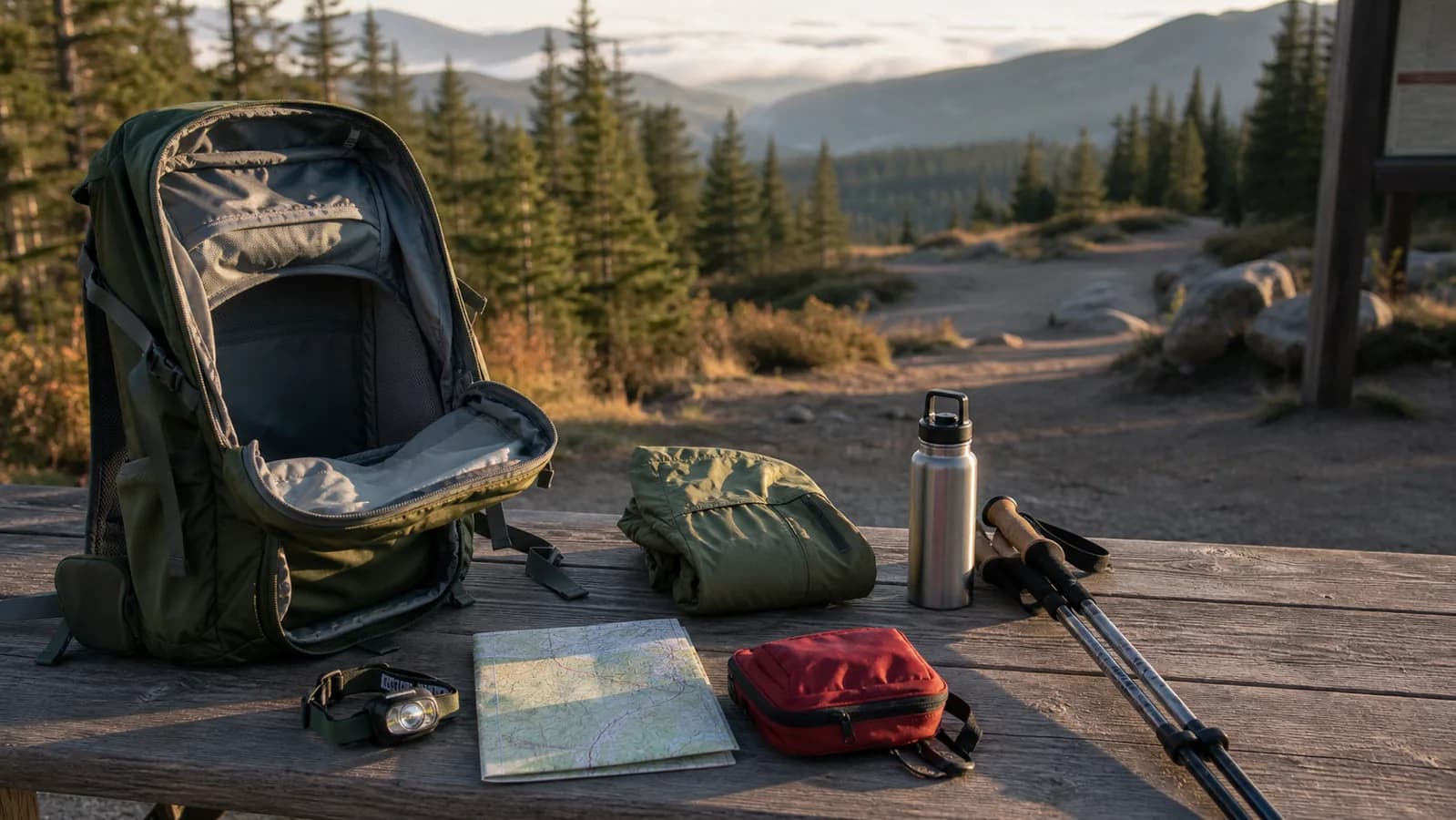
What This Checklist Covers: hiking gear checklist
A hiking gear checklist is a practical planning tool that helps you bring what you need without overloading for the trail. It is not a universal list—it adapts based on hike length, terrain, weather, and your fitness level. This guide covers the core categories every hiker should consider, explains the trade-offs between common options, and points out where beginner decisions tend to create problems later. Think of it as a framework for making informed choices rather than a rigid script.
Day Hike Essentials: The Non-Negotiables
For any day hike, the essentials fall into four categories: hydration, nutrition, weather protection, and emergency preparedness. These do not change much from trail to trail, though quantities shift with duration and conditions. A short two-hour loop demands less water and fewer calories than a full-day ridge walk, but the categories stay constant.
Nutrition should cover both quick energy and sustained fuel. Trail mix, sandwiches, and electrolyte drinks work for most people. The mistake beginners make is bringing too little food, not too much. Blood sugar crashes are preventable with even modest planning.
- Water: minimum 16 oz for short hikes, 32+ oz for longer outings
- Snacks and a backup meal item
- Rain jacket or shell regardless of forecast
- Sun protection: sunscreen, hat, or UPF clothing
- First aid basics: bandages, blister care, pain relief
- Emergency whistle and fully charged phone
- Headlamp if there is any chance of low light
Choosing the Right Backpack Size
Backpack size is measured in liters and directly affects how you pack and how your body carries load. For day hikes, 20 to 35 liters usually covers everything without encouraging overpacking. Overnight trips typically require 45 to 70 liters depending on shelter and cooking gear choices.
A common error is choosing a pack that is too large, which creates empty space that fills with unnecessary items. A smaller pack forces discipline and keeps your load centered, which reduces fatigue on longer trails. If you are unsure, start with a 25-liter daypack and add volume only when you consistently run out of room.
Hydration: Water Bottle vs Hydration Reservoir
Both water bottles and hydration reservoirs have practical advantages, and the choice depends on your hiking style and environment. Bottles are simple, durable, and easy to measure. You always know exactly how much you have left without stopping. They work better in cold weather because frozen bottles are easier to thaw than frozen hoses.
Reservoirs fit inside packs and allow drinking without breaking stride, which many hikers prefer on steep or technical terrain. The downside is that monitoring intake requires more attention, and reservoirs are harder to clean thoroughly. For dusty or sandy trails, bottles often win because grit does not clog a spout.
How to Choose Trekking Poles
Trekking poles reduce joint strain on descents, improve balance on uneven ground, and provide extra support when fording streams or navigating loose surfaces. They are not mandatory, but they make a noticeable difference on longer or steeper hikes, especially as you age or carry heavier loads.
Key factors are weight, grip material, and locking mechanism. Collapsible poles pack smaller for travel but have more moving parts. Fixed-length poles are lighter but less adaptable to terrain. Grip materials like cork or foam absorb sweat better than rubber in warm conditions. Test the locking mechanism before you buy—cheap twist locks can slip under load.
Clothing and Layering for Variable Conditions
Mountain weather changes faster than most beginners expect. The layering principle is straightforward: a base that moves moisture, an insulating middle that retains warmth when wet, and a shell that blocks wind and rain. Cotton is a poor base choice because it stays wet and chills you quickly.
For day hikes in temperate climates, a light fleece or puffy layer plus a waterproof shell covers most scenarios. In hotter climates, sun-protective fabrics and adequate ventilation matter more than insulation. Always check the elevation profile of your planned route—temperature drops roughly 3 to 5 degrees Fahrenheit per 1,000 feet of gain.
Navigation and Safety Basics
Even well-marked trails sometimes become unclear at junctions or after weather damage. A basic navigation kit includes a map of the area, a compass, and the downloaded trail on your phone in offline mode. Batteries die and service disappears, so analog backup matters.
Emergency items should reflect realistic scenarios. A space blanket fits in a pocket and prevents hypothermia if you are injured and stranded. Telling someone your route and expected return time adds a layer of accountability that smart hikers build into their trip plans.
- Physical map of the area in addition to digital
- Compass that matches your map's scale
- Offline trail download on your phone
- Space blanket or emergency bivy
- Basic first aid supplies tailored to your group
- Emergency contact information written down
What to Pack for a First Hike
First-time hikers often underprepare in nutrition and overprepare in gear. The instinct is to pack for disaster scenarios, but most trails have regular hiker traffic and cell service. Bring more water than you think you need, more food than you plan to eat, and leave specialty items at home unless you know the conditions demand them.
Start with a trail that matches your fitness honestly. A four-mile loop with moderate elevation on a well-traveled path teaches you more than struggling through a difficult route. Pay attention to how your feet feel, whether your pack sits correctly, and if your water intake feels sufficient. Those observations shape your next outing.
Common Mistakes and Trade-Offs
The most frequent gear mistake is carrying too much weight from the start. Every item should earn its place by solving a real problem or fulfilling a specific need. If you have not used an item on three consecutive hikes, it probably does not belong in your pack for the next one.
Trade-offs are inevitable. A lighter pack means less capacity for emergency supplies. Choosing a hydration reservoir means giving up the certainty of a visible water gauge. Selecting collapsible trekking poles adds flexibility but introduces potential failure points. These are not right-or-wrong choices but ongoing decisions based on what you value most on the trail.
Printable Summary
Use this summary to prepare your pack before any day hike. Adjust quantities based on hike duration, weather, and your personal needs. Review it before each trip to ensure nothing is left behind and nothing unnecessary is added.
- Water and hydration system for the distance
- Trail nutrition plus emergency backup
- Weather-appropriate layers and rain protection
- Sun protection for exposed terrain
- First aid and emergency signaling
- Navigation tools with offline backup
- Communication plan: route shared, return time set