
What Is an Outdoor Trip Planner and Why You Need One
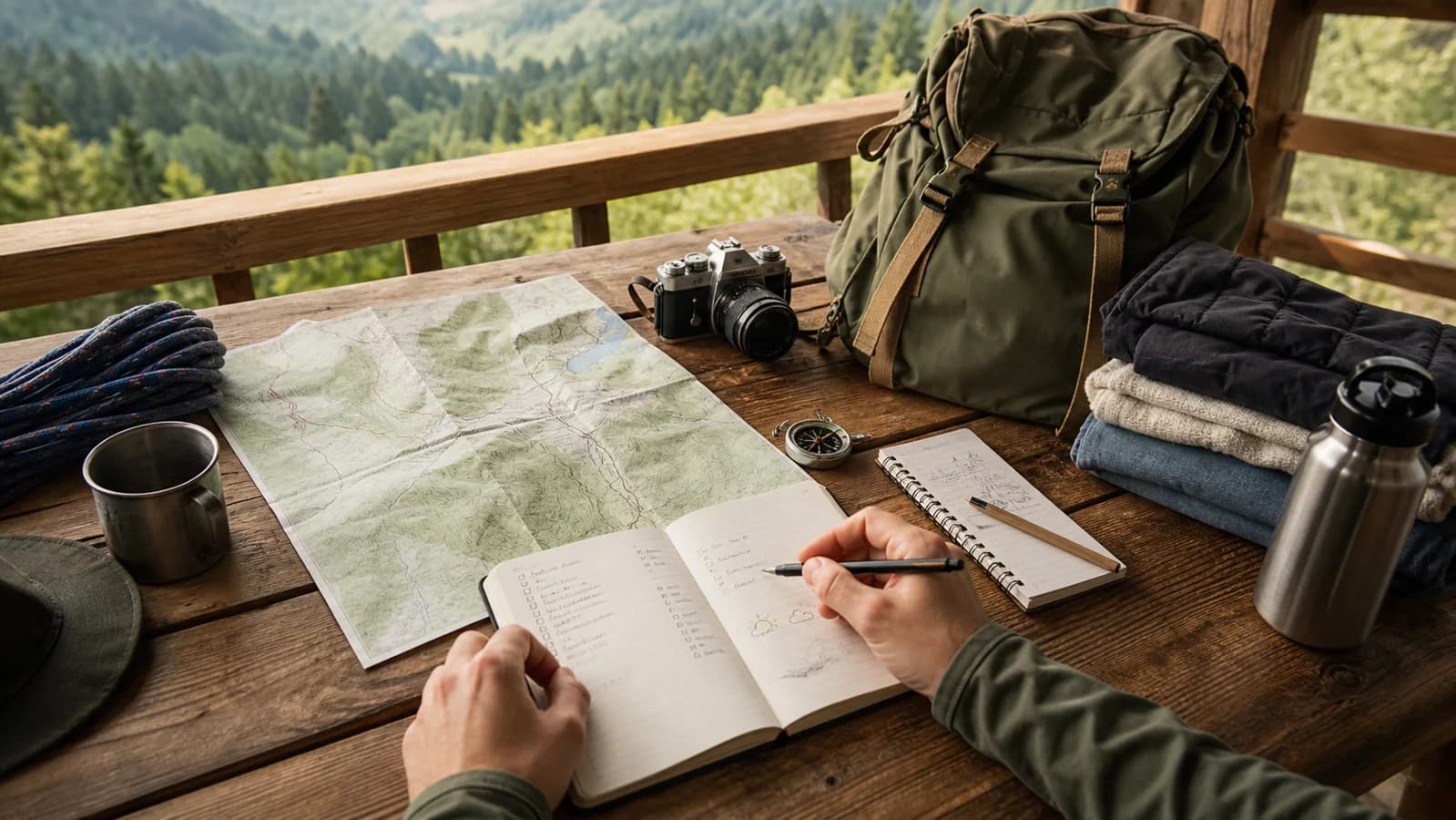
An outdoor trip planner is a system—whether digital, paper, or hybrid—that helps you organize the logistics of an outdoor adventure. It typically covers route planning, gear lists, safety contacts, permits, and timing. The goal is not to over-engineer your trip but to reduce the mental load so you can enjoy the experience rather than scramble to remember things mid-adventure.
For beginners, a trip planner acts as a teacher. Working through the planning process teaches you what questions to ask before you go: What weather should I expect? What gear do I actually need? Who needs to know my route? Experienced travelers use planners to refine logistics and avoid forgetting routine but critical steps, like checking tire pressure before a long drive to a trailhead.
The core value of any outdoor trip planner is consistency. Whether you are planning a solo overnight hike or a week-long road trip with multiple camping stops, having a repeatable process means you spend less time figuring out what to do and more time doing it. This is especially valuable when you plan trips infrequently or switch between different types of outdoor activities.
Key Features to Look for in an Outdoor Trip Planner
Not every trip planner handles the same tasks well. The most useful systems include a gear checklist that you can customize for different activities, a weather and conditions reference, a logistics section for permits or reservations, and an emergency contact and itinerary share feature. These elements cover the basic planning cycle from preparation through execution.
For outdoor travel specifically, look for features that address environmental and safety variables. A good trip planning approach includes space to record trail conditions, water sources, cell coverage zones, and evacuation routes. These details are easy to overlook but matter significantly in remote backcountry settings where conditions can change rapidly.
Modularity is another important feature. You likely need different approaches for a quick weekend hike versus a multi-day backpacking route versus a road trip with camping legs. A flexible outdoor trip planner lets you pull together the pieces you need without rebuilding from scratch every time. Some travelers maintain separate checklists for different activity types—a hiking-specific list, a camping-specific list, and a general travel list—which they combine as trip requirements dictate.
Choosing the Right Approach for Different Outdoor Activities
Different activities impose different planning demands. A day hike on a well-marked trail requires far less preparation than a multi-activity road trip that includes dispersed camping, paddling, and a long drive through remote terrain. Matching your planning depth to the activity complexity is one of the most practical decisions you can make.
For hiking, the planning focus centers on route research, fitness preparation, and a lightweight gear loadout. A hiking-specific checklist should include navigation tools, water treatment, emergency shelter, and food appropriate for the distance and elevation change. Weather awareness and a realistic time estimate for the route are equally important planning elements.
Camping trips—especially car camping or road trip scenarios—shift emphasis toward comfort gear, meal planning, and site setup. A road trip camping checklist typically covers sleeping arrangements, cooking equipment, lighting, and camp furniture. You also need to account for vehicle preparedness and route logistics in a way that a simple day-hike plan does not.
Multi-activity trips require the broadest planning scope. You are managing transitions between activity types, each with its own gear requirements and timing. A multi activity trip packing list should group items by activity and by function—shared base camp items versus activity-specific gear. This prevents the common problem of arriving at a destination and realizing your climbing shoes stayed in a bag meant for the car.
Common Mistakes to Avoid with Trip Planning Tools
One of the most frequent mistakes beginners make is treating a trip planner as a one-time exercise rather than an ongoing process. Your plan should evolve as you gather information—checking weather forecasts, confirming permit availability, adjusting gear based on the latest trail reports. A planner that you revisit and update is far more useful than a document you write once and forget.
Another mistake is over-planning to the point where the plan becomes rigid and stressful. Some travelers create exhaustive lists and rigid itineraries that leave no room for the flexibility that outdoor travel often demands. Weather changes, trails close, and sometimes the best part of a trip is an unplanned detour. A good trip planning approach builds in flexibility rather than eliminating it.
Failing to share your itinerary with someone not on the trip is a safety oversight that even experienced outdoor travelers sometimes neglect. Your plan should include a clear itinerary that a designated contact can access if needed. This does not require elaborate tools—sometimes a written note with your route and expected return time is enough—but it should be a non-negotiable part of your outdoor trip planner.
Practical Trade-offs: Digital Planners vs. Traditional Methods
Digital outdoor trip planners offer convenience and portability. You can access your checklist from a phone, update it on the fly, and share it instantly with travel companions. Many digital tools integrate with maps, weather services, and reservation platforms, reducing the number of places you need to look for planning information.
However, digital tools have limitations in the field. Battery life, screen visibility in bright sunlight, and the risk of damage in wet or dusty conditions are real concerns. Paper checklists and printed maps do not lose power and are often easier to reference quickly when your hands are cold or dirty. For this reason, many experienced outdoor travelers use a hybrid approach: digital for planning and research, paper as a backup in the field.
The trade-off ultimately comes down to personal preference and trip context. A weekend car camping trip with reliable cell service might be well-served by a phone-based planner. A remote backcountry expedition in an area with no connectivity calls for paper-based systems and offline maps. The key is matching your planning tools to the conditions you will actually face.
Building Your Pre-Trip Outdoor Checklist
A pre trip outdoor checklist is the operational core of your planning system. It answers the question: do I have what I need to execute this trip safely and comfortably? Building a useful checklist requires thinking through the trip in layers, starting with the basics and adding specificity based on conditions and activities.
Start with universal essentials: navigation tools, water and a way to treat it, food appropriate for the trip duration, shelter or clothing for unexpected weather, and a first aid kit. From there, layer in activity-specific items. For camping, this includes sleep system, cooking gear, and camp lighting. For hiking, add navigation, trekking poles if needed, and blister care. For any trip involving remote travel, add emergency communication and repair supplies.
The most practical checklists are structured in categories rather than as a flat list. Group items by location or function—base camp, day gear, emergency kit, vehicle supplies. This structure helps you check completeness in stages and makes it easier to identify gaps. Review and refine your checklist after each trip based on what you used, what you missed, and what you packed but never touched.
Weekend Adventure Planning Checklist Essentials
Weekend adventures often fall into a planning gap—too short to justify elaborate preparation, but long enough that forgetting something important creates real discomfort or risk. A focused weekend adventure planning checklist prevents over-planning while ensuring you have what matters most.
For a typical weekend outdoor trip, your checklist should cover three domains: logistics, gear, and provisions. Logistics includes confirming reservations or permits, checking weather forecasts, and informing someone of your plans. Gear covers clothing layers, sleep system, cooking equipment, and lighting. Provisions include enough food for meals and snacks, water or treatment supplies, and any special items tied to planned activities.
The key to an effective weekend checklist is ruthless prioritization. You are not trying to replicate a week-long expedition in two days. Focus on the items that protect your health and safety, support your planned activities, and maintain basic comfort. Everything else is optional and should be added only if you have the capacity andpack space.
How to Plan an Outdoor Trip Step by Step
Effective outdoor trip planning follows a predictable sequence. Begin with the trip concept: where are you going, what will you do there, and how much time do you have? This foundation shapes every subsequent decision. Next, research the practical details—access routes, permit requirements, seasonal conditions, and any current closures or restrictions that affect your plans.
With the basics confirmed, move to logistics planning. This includes your transportation method, accommodation if applicable, and the sequence of activities. Build a rough timeline that accounts for travel time, setup and breakdown time, and realistic activity durations. Be honest with yourself about travel fatigue and how it affects what you can realistically do on the first day.
The third step is gear and provisions planning. Use your activity-specific checklist to identify what you need, then cross-reference against what you already own. Note any rentals or purchases required. The final step is the pre-trip check: confirm reservations, review weather forecasts one last time, pack systematically, and do a final mental walk-through of the trip. This step catches oversights before they become problems in the field.
Final Tips and Next Steps
The best outdoor trip planner is the one you actually use consistently. A simple system that you follow is far more valuable than a sophisticated one that sits unused. Start with a basic structure and refine it over time based on your experiences. Each trip teaches you something new about what to prepare for and what to prioritize.
Build your planning habits around your own travel patterns. If you tend to plan last-minute, create a standing checklist that you can deploy quickly. If you plan far in advance, build review checkpoints into your calendar so you do not lose track of reservations or permits. The goal is to develop a reliable process that reduces stress and increases the quality of your outdoor experiences.
Continue exploring trip planning systems and approaches through the most relevant HQ Triply publication for your next adventure type, whether that involves backcountry routes, road trip logistics, or multi-sport journeys.