
Opening: What You Actually Need for a Day Hike: day hike essentials
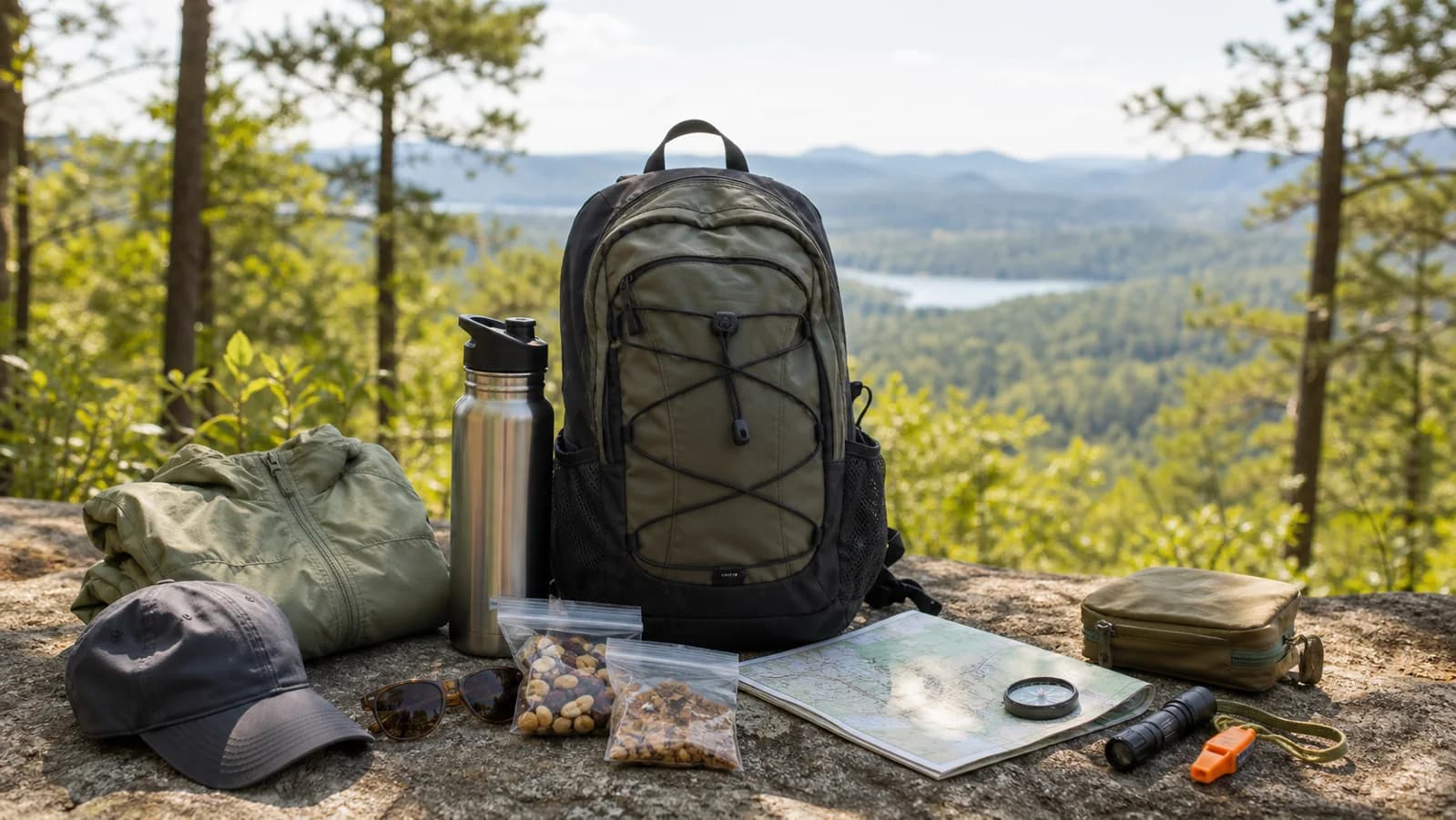
Day hike essentials are simpler than most people expect. For most trails under 10 miles, you need hydration for your full duration, weather-appropriate clothing layers, solid footwear, nutrition, sun protection, and a basic first aid kit. The rest depends on your trail conditions, weather, and personal needs. This framework helps you make those decisions without overcomplicating your pack or underestimating what matters. Good day hike preparation is less about having every possible item and more about choosing the right fundamentals for your specific adventure.
The Core Day Hike Essentials
A reliable hiking gear checklist starts with footwear that supports your ankles and grips the terrain you expect. Weather-appropriate layers matter even on clear days, since elevation changes create temperature swings. Navigation tools like a phone GPS or physical map remain essential even on marked trails. Carry at least two liters of water for a full-day hike, and pack more food than you think you need. Sun protection and a basic first aid kit round out the fundamentals. Everything beyond these items depends on your trail, season, and personal factors. Building your kit around proven essentials first means you will not forget something critical while overpacking items you rarely use.
Choosing the Right Hiking Backpack Size
A hiking backpack size guide starts with capacity: most day hikes need 20 to 30 liters. Shorter hikes under two hours may only require 10 to 15 liters. Your gear volume, not your body type, drives the right size. A well-fitting pack distributes weight through the hip belt rather than your shoulders. Look for an adjustable frame length if you are between sizes. Test the load lifters, which pull the weight toward your body for better balance. The best way to choose is to load your expected gear and walk around with it before your hike. A pack that feels comfortable empty may shift uncomfortably when loaded with water and supplies.
Water Bottle vs Hydration Reservoir
Both options have distinct practical trade-offs. Water bottles are simple, reliable, and make it easy to track exactly how much you are drinking. They allow quick refills from sources along the trail. Hydration reservoirs let you drink without stopping or reaching for a bottle, which many hikers prefer on long or steep sections. They also distribute water weight more evenly inside your pack. Reservoirs add complexity: bite valves can fail, tubes can freeze in cold weather, and you lose the ability to see your remaining water at a glance. Many experienced hikers carry both: a reservoir for convenient sipping and a backup bottle for measured hydration or emergency use.
Do You Need Trekking Poles?
Trekking poles reduce joint impact, especially on descents, and provide stability on uneven or loose terrain. They engage your upper body, which can improve endurance on longer hikes. Poles shine during stream crossings, snow crossings, and anywhere a third point of contact helps. However, they add weight to your hands and can interfere with scrambling or photography. Some hikers find they struggle with poles on smooth rock or in dense brush. Poles are not essential for every hike, but they become valuable if you have knee concerns, carry heavier loads, or tackle steep terrain regularly. Trying poles on a few day hikes before committing helps you decide if the benefit justifies the added cost and complexity.
What to Pack for Your First Hike
When planning what to pack for a first hike, start with the essentials and add thoughtfully. Water, food, layers, sun protection, and a first aid kit cover most situations. Add a headlamp if your hike extends into evening hours. A lightweight rain shell handles unexpected weather changes. A small knife or multi-tool serves multiple purposes. Leave unnecessary items at home: this is not camping, and you do not need shelter, sleeping gear, or cooking equipment. A good principle for beginners is to pack what you think you need, then remove one item you are unsure about. Experience will teach you what you actually use versus what feels reassuring but goes untouched.
Common Mistakes to Avoid
Several mistakes appear repeatedly among hikers new to day trips. Wearing brand-new footwear without breaking them in leads to blisters and sore feet mid-hike. Overpacking comfort items that never get used adds unnecessary weight. Relying on a single water source that is dry or closed catches many unprepared hikers. Underestimating how weather changes, especially at elevation, causes discomfort and safety concerns. Skipping sun protection because it is cloudy results in painful burns. Failing to tell someone your plans and expected return time creates risk if something goes wrong. Reviewing these pitfalls before your hike helps you avoid them without overthinking your preparation.
Making Trade-Offs Based on Your Hike
Different hikes demand different priorities. A well-marked trail near services allows you to travel lighter than a remote alpine route where help may be hours away. Warm weather hikes reduce clothing needs but increase water demands. Cold conditions require more insulation layers and protection for exposed skin. Steep terrain benefits from trekking poles and stable footwear. Longer adventures reward lighter loads, pushing you to question every item. The universal trade-off in day hike essentials is weight versus preparedness. Carrying more than necessary tires you faster, but leaving out something critical creates real problems. Adjusting this balance based on your specific hike builds the judgment that experienced hikers rely on.
Conclusion
Day hike essentials come down to understanding your specific conditions and building a kit that matches them. Focus on reliable footwear, appropriate hydration, weather-ready clothing, and nutrition. Choose your backpack size based on what you actually need to carry. Decide on trekking poles based on your terrain and joint health rather than assumption. Avoid common mistakes like overpacking new footwear or underestimating water needs. The goal is not a perfectly packed kit on your first hike; it is a functional kit that grows more refined with each outing. Start with the fundamentals, learn from each trip, and your day hike preparation will become intuitive.