
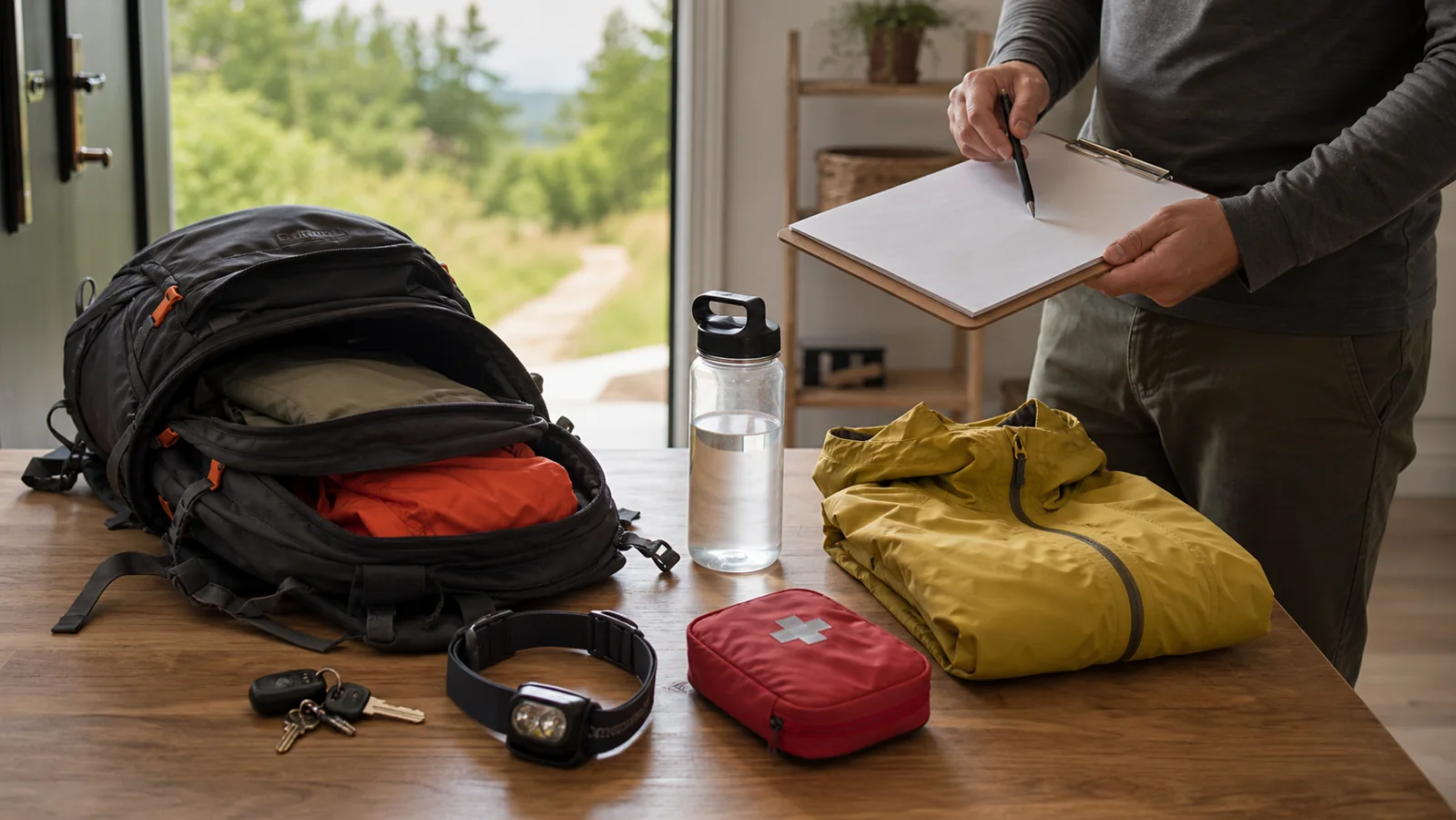
Why a Pre Trip Outdoor Checklist Matters
Every year, preventable mishaps ruin otherwise great outdoor trips. A missing lighter, a forgotten first aid item, or an ill-suited packing load can sideline an adventure before it begins. A pre trip outdoor checklist is not about over-preparing—it is about eliminating the dull, predictable problems so you can focus on the experience itself.
Whether you are planning a weekend car-camping trip with the family, a solo overnight on a trail, or a multi-activity road trip across several terrain types, the underlying logic is the same: know what you need, confirm you have it, and load it in a way that serves your itinerary. A well-structured outdoor trip planner approach starts here, with a checklist you can reuse and refine over time.
- Reduces forgotten gear through systematic review
- Adapts to different activity types with modular sections
- Saves time on departure day by front-loading decisions
- Minimizes post-trip surprises, like damaged or lost items
What Every Outdoor Checklist Needs: The Core Categories
A checklist is only as useful as its organization. The best outdoor trip planners divide gear into categories that match the sequence of your departure routine: shelter and sleep, clothing and layers, food and hydration, navigation and safety, and personal items. Grouping gear this way helps you audit your kit logically and makes it easy to spot gaps.
These categories form the skeleton of any good packing checklist, whether you are heading out for one night or two weeks. You will add or remove specific items based on season, weather forecast, terrain, and activity type, but the skeleton stays consistent. That consistency is what turns a chaotic scramble into a repeatable, trustworthy system.
- Shelter and sleep system (tent, sleeping bag, pad, pillow)
- Clothing layers (base, insulation, shell; extras for cold or wet conditions)
- Food and hydration (meals, snacks, water storage, treatment options)
- Navigation and safety (map, compass or GPS, first aid kit, emergency shelter)
- Personal items (toiletries, medications, sunscreen, insect repellent)
- Lighting (headlamp with spare batteries)
- Tools and repair (multi-tool, duct tape, cord, knife)
Camping Checklist: Base Camp Essentials
Camping trips are uniquely demanding because you are transporting your entire living system for an extended period. The road trip camping checklist approach starts with vehicle load organization: put the items you need first—camp chairs, kitchen gear, fresh food—at the front of the car or in an easily accessible box. Heavy gear goes low and toward the center to preserve vehicle balance.
At camp, your priorities shift to comfort and safety. A site-specific camping checklist should include site-setup gear (stakes, guylines, a mallet), a kitchen system (stove, fuel, pots, utensils, biodegradable soap), and a separate night kit (extra insulation layer, headlamp, campfire tools). Separating these groups prevents the frustrating search for a headlamp inside a buried stuff sack at dusk.
- Site setup: tent, footprint or tarp, stakes, guylines, mallet
- Kitchen: stove, fuel, lighter/matches, cookware, utensils, plates/bowls, water container
- Sleeping: sleeping bag rated for expected low temp, sleeping pad, pillow, dry bag for clothing
- Comfort: camp chairs, table or tarp setup, lantern, camp shoes
- Cleanup: trash bags, trowel, biodegradable soap, sponge
Hiking Checklist: Trail Day Priorities
Day hiking and overnight backpacking share many of the same priorities, but the ratios differ sharply. A hiking checklist must account for weight as a functional constraint—every ounce you carry affects your energy and joints over miles. This is where the outdoor trip planner mindset becomes essential: choose multi-use items, trim redundancy, and weigh your pack before you leave the house.
Navigation and hydration carry more weight in a hiking context than they do for base camping. Even on well-marked trails, a map and compass remain the most reliable backup when electronics fail. Water treatment is non-negotiable on longer routes where natural sources may be the only supply. Build your first aid kit to match your group size and the remoteness of the route.
- Day hike base: backpack, water bottles/reservoir, snacks, layers, rain shell
- Navigation: map, compass, trail description or guidebook
- Safety: first aid kit, emergency whistle, space blanket, phone backup battery
- Sun and insect protection: sunscreen, hat, sunglasses, insect repellent
- Overnight add-ons: tent or shelter, sleeping bag, pad, cookset, extra food, headlamp
Multi-Activity and Road Trip Camping Checklist
Multi-activity trips—combining kayaking, biking, and hiking over several days—require a flexible packing checklist that acknowledges you will not unpack and repack from zero each day. Design your kit in modular layers: a base camp layer that stays set up, a day-activity layer that changes, and a personal essentials layer that moves with you between sites.
A road trip camping checklist benefits from the extra vehicle space but suffers from its own trap: the temptation to over-pack because you have room. Fight this by setting a gear limit per category, like two pans maximum or one dedicated cooking box, and stick to it. When your trip spans varied conditions—desert heat followed by mountain cold—pre-plan clothing transitions and avoid bringing two full wardrobes.
- Modular packing system: base layer, activity layer, personal layer
- Transport-specific: bike rack or kayak straps, dry bags, recovery gear
- Climate buffer: moisture-wicking layers for heat, insulated layers for elevation
- Communication: walkie-talkies for group trips, offline maps, itinerary left with a contact
Common Pre Trip Mistakes and How to Avoid Them
The most common pre trip mistake is building a checklist around gear you own rather than gear you need. Starting from a list of possessions creates invisible gaps—you will copy what you packed last time, including items that sat unused. Instead, start from your itinerary: what will you do each day, what conditions will you face, and what is the minimum kit that covers those needs?
Another frequent error is skipping the gear shakedown. Even a quick repack at home—checking that your tent seals, your stove lights, your batteries are charged, and your first aid supplies are not expired—catches problems before they become trip-ending. A pre trip outdoor checklist that never gets reviewed against actual gear is a checklist in name only.
- Packing from memory instead of a written list
- Skipping the gear shakedown before departure
- Ignoring weather forecast updates in the 24 hours before leaving
- Overloading for short trips (carrying a full basecamp kit for a single night)
- Failing to communicate the trip plan with someone not attending
Practical Trade-Offs: Depth vs. Portability
A comprehensive checklist is thorough; a portable one you actually use is valuable. The tension between these two goals is real. A five-page master checklist covering every activity and condition is excellent for annual planning but impractical for the morning you are loading the car. The solution is hierarchy: maintain a master checklist for seasonal updates and carry a condensed version on the trail.
Weight versus redundancy follows the same logic on foot. Bringing two ways to start a fire is not redundancy anxiety—it is sound backcountry practice. Bringing three camp knives when you will use one is weight you will regret on the trail. Apply this discipline across every category: ask whether each item earns its weight by solving a problem you are likely to encounter.
- Keep a master checklist for home; use a field version with top priorities
- Trade extra clothing layers for better insulation ratings on the sleeping bag
- Choose items that serve multiple functions (trekking poles for shelter setup)
- Accept that no list is perfect; the goal is reducing preventable problems, not eliminating all risk
How to Keep Your Checklist Current
A stagnant checklist is almost as useless as no checklist. Review yours after every trip—what did you reach for that was not on the list? What sat unused? What broke or ran out? These notes are the raw material for a continuously improving outdoor trip planner system. Even small additions—a spare carabiner, a roll of gaffer tape—accumulate into a kit that fits your actual habits.
Seasonal reviews matter too. Your summer hiking checklist and your winter camping checklist will share perhaps 40% overlap; the rest needs refreshing as daylight hours, temperatures, and hazards shift. Store your checklists digitally or in a notebook so revisions are quick and documented.
- Log notes immediately after each trip while details are fresh
- Update for seasonal changes in weather, daylight, and terrain conditions
- Test gear before it is needed—do not wait for the trip to discover a failure
- Review consumables (fuel, batteries, food, medications) before every departure
Printable Quick-Reference Summary
Use this summary as a departure-day reference. Cross-reference against your master checklist to confirm each category is covered. Check weather forecasts within 24 hours of leaving and adjust clothing layers and shelter stakes accordingly. Confirm water sources along your route, charge all electronic devices, and let a trusted contact know your itinerary before you go.
- Shelter/Sleep: tent, pad, bag, pillow, dry bag
- Clothing: base layers, insulation, shell, camp shoes
- Food/Hydration: meals, snacks, water storage, treatment
- Navigation/Safety: map, compass, first aid, fire-starting, emergency shelter
- Kitchen: stove, fuel, cookware, utensils, trash bags
- Personal: toiletries, medications, sunscreen, headlamp with batteries
- Tools: multi-tool, duct tape, cord, repair kit
- Communication: trip plan shared, phone charged, backup battery
Key Takeaways
A solid pre trip outdoor checklist is not a luxury—it is the foundation of a reliable trip planning system. Start with a master list organized by category, adapt it for each activity type, and run a gear shakedown before every departure. Prioritize modularity so your list works for weekend camping, day hikes, and multi-activity road trips without starting from scratch each time.
The best checklist is the one you actually use and refine. Treat it as a living document, update it after every trip, and keep a condensed version accessible for departure-day confirmation. That habit turns a simple list into a planning advantage that compounds with every adventure.